News for January, 2026
Hello, and welcome to the first roundup of environmental news for 2026.
I think a theme that should be pushed this year is recovery and restoration. True: there is much news that belittles the idea (as you will see below). Nevertheless, the notion is underscored by:
- the recent enactment of the UN High Seas Treaty, by which 60+ signatory countries pledge to provide biodiversity protections to 30% of the ocean and shorelines by 2030.*,
- the level of renewable uptake that is beginning to meet and exceed fossil fuel capacity, and
- despite the best efforts of a clade of usurping tyrants, the rule of law and the will of the people is still hanging on.
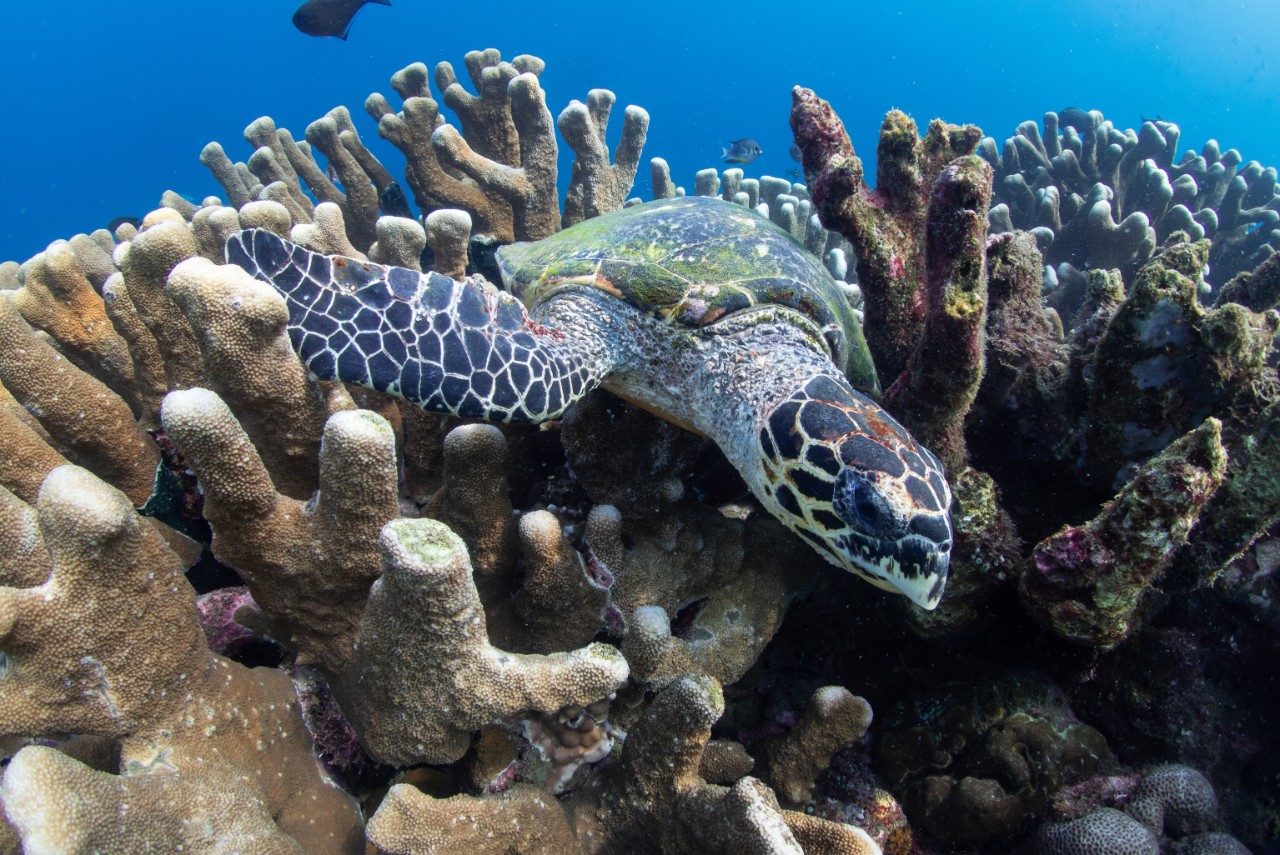 |
| Despite massive depredation, the oceans are remarkably resilient, if they are given time to recover |
* It's a more ambitious goal than 2050. How this will play out over the next four years will doubtless have the cynics rubbing their hands in glee.
So, what is the news?
Environment
The Ugly
- The US EPA has decided there is no economic value to clean air. Hyperbole? I wish it were.
- The UK Government's national security assessment on biodiversity loss and ecosystem collapse makes for grim reading, not least because the government sought to suppress its publication.
The Bad
- The lower Murray ecosystem is now listed as 'critically endangered'
- Wildfires are becoming increasingly common and widespread as the world warms. Here is how the global forest is changing as a result.
- Could conflagrations like the LA fires happen in Australia? Short answer: yes.
- EPA opinions notwithstanding, the smoke resulting from these fires is also a significant health risk
- Heat waves are a leading cause of death in people, and, increasingly, wildlife. Fortunately, more flying foxes survived on this occasion than didn't, but it's not hard to imagine an extinction event consisting of just one more hot day.
- Having just started to recover from last year's toxic algal bloom in SA, we don't need another one in Tasmania! (update: this particular bloom is fortunately of a variety that poses no risk)
The Good
- While southern right whale numbers have been booming for some time, the same has not been true of their northern counterpart (possibly because they've been the 'right' whale to hunt for longer? (No, that is not a pun, but the reason they are so called.). So, the birth of two dozen baby calves (a population growth of 5%!) is welcome news.
- Hopefully, their future now looks brighter. The UN High Seas Treaty came into effect on Jan 17. Prof. Tim Stephens explains what that means for ocean biodiversity. (Attenborough's Oceans documentary on Disney also explains its potential well)
- As Antarctica thaws, one question becomes less academic. Stephens again, on how is it to be governed?
- Should (ab)users of the environment pay for it? The notion of taxing polluters is starting to gain traction.
- Bacteria in tree bark are found to eliminate greenhouse gases. Every little bit helps...
- Much 'waste' is waste because it is in a form that can't be readily broken down into reusable components. Plastic polymer chains are a case in point. However, the problem is being worked on, with a recent announcement of an enzyme that can break down one of the more intractable forms: polyurethane.
- Similarly, renewable components are often (wrongly) criticised for their non-disposability. While most of this criticism is the usual FUD mischief, what to do with the massive fibreglass epoxy vanes of decommissioned wind turbines has been a concern. This Chinese company has a solution.
- Here is another example of solar panels helping the environment.
Climate
 |
| MethaneSat imagery of methane emissions in Queensland's Bowen Basin. |
The Ugly
- Trump has abruptly withdrawn the US from a fundamental UN climate treaty. Unlike the Paris Agreement (which Trump withdrew from on assuming office, and which is now official), this is an irreversible step, which has people wondering whether Trump can do this unilaterally in the first place (not that legalities have ever stopped Trump from doing what he wants to anyway, although they have sometimes brought him up short)
- Half of the world's emissions originate from 32 companies. So it makes sense that...
- Oil companies are organising a congressional campaign to protect themselves from climate lawsuits.
- You might recall that the ICJ recently found that states could sue each other for climate related damages. You might also recall Trump invaded Venezuela in order to (among other things) expand oil profits. This may have repurcussions
- Meanwhile, a survey of editorials in UK newspapaers finds an upsurge in opinions against further climate action. This is what a right wing political landscape intent on protecting its patrons gets you.
The Bad
- Apart from fuel, bushfire severity is governed by heat, wind, and (low) humidity. It's a combination that can produce an alarming increase in fire activity, and which allows no time to prepare. This is how modelling for a warming world matches the fires at Natimuk, near Horsham.
- Climate change doesn't just cause more hot weather. It also causes more severe changes in weather, as people in the Otways recently experienced with torrential rain and flash flooding, days after bushfires were tearing across much of the landscape.
- Insurance premiums are likely to rise after Victoria's recent bushfires. It's a cruel conundrum: risk increases just when people are being hardest hit.
- As global warming intensifies, Alex Steffen writes that it isn't just the big things, like tipping points and extreme weather events, that we need to be worried about.
The Good
- Climate commentator Assaad Razzouk gives a regular update of good climate news on his Bluesky account. Time to add him to the regular list of common sources.
- Despite the loss of their methane detection satellite in June, MethaneSat have been able to derive quite a bit of information from the data they did obtain. Several papers have been published with many more in review stage. One finding: emissions intensity from Texas are double those of New Mexico, probably due to more stringent emissions reduction guidelines (but would the EPA consider it economically valuable?). Their report may be viewed here.
- A study identifies the most persuasive ways in which messages related to climate can be framed.
- It's probably just noise, but this month's Climate TRACE report notes a slight decrease in carbon emissions for November 2025 compared to November 2024.
Energy
Much of the world's current woes boils down to fossil fuel interests protecting their economic patch. They're fighting for it all the more desparately because it is becoming increasingly clear that they are losing.
The Ugly
As if conducting acts of piracy (shooting up fishing vessels) via the US Navy weren't bad enough, Trump went ahead and performed a 'decapitation strike' against Venezuela so as to regain access to and pillage their oil reserves on his own terms. To confuse the issue, oil companies are claiming they don't want this oil, but they do, and this is Trump, so it's hardly surprising that the truth is even murkier.
The Bad
- US gas exports are booming... and, consequently, so are domestic energy prices. (it's a case of creating a demand for something with a limited supply...)
- Much of this gas demand is artificially created by the sudden push for data centres. Indeed, given that the gas facilities will be built before the data centre bubble bursts, they are probably the point of the bubble in the first place.
- Australia is currently in a better position, but we shouldn't get complacent. While Australia has the potential for renewable energy exports, that potential is being sapped.
The Good
- Over 50% of Australia's energy demands for the December quarter were met by renewables. In contrast to the US forced gas feed experience, energy prices have reduced.
- Even Perth's isolated energy grid has recently been able to generate over 90% of its energy needs from renewables.
- Basically put, batteries are beating gas.
- Despite the current administration's best efforts, solar power met 61% of US growth in energy demand in 2025.
- Uruguay has quietly switched to obtaining 99% of its power from renewables.
- Blocked by one of Trump's Executive Orders, courts rules that an offshore wind project may resume construction. Others are likely to follow.
- A thirty year old windfarm in Ireland has just been retired. Each of the turbines in the project replacing it generates as much power as the entire original.
- Elsewhere, coal demand in both China *and* India has fallen for the first time on fifty years.
- Another Volts podcast, on managing the energy grid like the internet (hopefully without the spam and trolls)
- Battery storage costs have dropped by 50%... in the past eighteen months.
- Amsterdam becomes the first city to ban fossil fuel ads.
Resistance
The ugliness of ICE intensifies. Building on their obnoxiousness from LA, Portland, and New Orleans, their current focus on Minneapolis amounts to an occupying force that arrests and bludgeons people without discrimination and with impunity. (Even if they did have legal authority over federal forces, the local police are outnumbered 4:1).
Not surprisingly, people are not standing for this, but they are not responding with violence. Instead, they are forming neighbourhood support groups: tracking ICE activities, and making sure their every action is documented, for later. Support networks have also been established to assist people at risk of arrest and deportation; ensuring they are kept supplied.
 |
| How the ICE crackdown is going (artwork by Emily K) |
So far, this has resulted in ICE personnel murdering two people (Renee Good and Alex Pretti.) in plain sight, and on camera. It has also resulted in most ICE patrols being thwarted in their attempts to arrest people (illegal or otherwise) by folk watching their every move, and shaming them into withdrawing. Some people still get caught however. Their cars are left in the street where they are stopped, unattended, as a warning.
Why are ICE doing this? It's a standard fascist tactic to provoke a reaction so as to give the excuse for a *real* crackdown, invoke the Insurrection Act, and suspend the Constitution. Indeed, the situation has similarities to a simulation run in 2024, which concluded that a civil war could be triggered if local police start resisting.
So far, none of this has come to pass. However, even though Bovino has been 'retired', the situation remains tense, and is taking its toll.
The Ugly
- Renee Good's slaying was clearly a premeditated act by the ICE officer. It has prompted, not a criminal investigation into her killer, but a witch hunt on her family under the standard alienating label of 'terrorism'. Several state DOJ attorneys have resigned in protest.
- No first amendment for you! They claim it's a server issue, but it seems the new owners of TikTok (Oracle) don't like people critical of ICE, or Trump, and are blocking their videos.
- Private army, anyone? ICE have a $70 billion allocation in Trump's 'big beautiful budget'. This exceeds that of the US marines.
- When your an invulnerable institution whose officers can do what they will with no identification, it's little wonder you will attract imitators.
- What/who is behind Trump's obsession with Greenland, anyway?
- As for Canada... Trump appears to be supporting separatists in Alberta.
- The events of Oct 7, 2023 were undeniably appalling. Yet, it seems anyone who claims that Israel's response in Gaza are disproportionate and amount to acts of genocide will get yelled from the room. A figure of 71,000 Palestinian casualities has now been admitted to by the IDF.
The Bad
- The first step to getting to a better place is noting you are not in a good place. Canadian PM James Carney addresses the World Economic Forum, laying out in plain terms the harsh truth about where the 'middle states' are placed with the US under Trump, and what they need to start doing about it.
- Having an intelligence gathering app answerable to a foreign power embedded in your military systems is not a good idea, especially with the US the way it is currently.
- The grim state of US science after a year of Trump 47
- Still worried Global Socialism will subvert our societies? The ABC provides a comprehensive overview of the opposite: Atlas Network, and the Neoliberal movement in general.
The Good
- While the focus is currently on Minnesota, ICE is a federal agency active in all states. Some students have created an app to track their activities.
- Trump proposed a crippling budget for the sciences and NASA. The US Congress have passed increased spending for these fields. (Space science, in particular, is popular with conservatives: it aids local industries)
- Locally, the Victorian Police have quietly revoked their powers to stop and search people at random in the Melbourne CBD four months earlier than planned. No reason was given, but an imminent court challenge could have had something to do with it.
Transport
The Ugly
- Hybrid vehicles are intended to keep drivers chained to the fuel pump, rather than provide a bridge to renewable powered travel. GM's CEO more or less admitted it.
- Teslas wouldn't be such an awful vehicle manufacturer if it didn't have such an awful owner. Musk has just announced Tesla will be discontinuing the production of model S and X vehicles in favour of... Optimus robots!?!?
The Bad
- With this year's 'Tour Down Under' occurring in the middle of a massive heat wave, calls are being made to drop fossil fuel sponsors.
The Good
- Australians will be getting more choice, this year, as more EV brands and models come onto the market.
- Meanwhile, in Europe, EVs outsold petrol vehicles for the first time.
Plaigue
 |
| An illustration of the AI chat feedback loop (David Revoy. CC-NC-SA). |
The Ugly
- It's been noted before that early adopters for new media tend to be political agitators and vendors of pornography. AI has followed this trend, according to the Internet Watch Foundation, enabling a rapid proliferation of child sexual abuse material.
- Having recently raised the issue of AI-induced psychosis, a student seeking to introduce an AI-driven society was charged with attempting to fire bomb an Australia Day celebration. Apparently, he got as far as obtaining an incendiary device before it occurred to him to wonder what he was actually doing. A little late to avoid arrest, however.
The Bad
- Surprise! Those claiming that adopting AI will send productivity through the ceiling are finding that the ceiling in question refers more to that of the office below.
- The proliferation of data centres has reached new levels of bubbling absurdity, with the 'Matador': a 6000 acre nuclear(!) facility being proposed. In Texas, naturally. (the locals are not amused)
- The gas boom associated with the proliferation of data centres is the point. Ketan Joshi explains the desperate ploy further.
The Good
- In case you've been wondering what AI is about, here is a sequence of videos describing how one variant of it, the 'Large Language Model' (LLM), operates.
- All the bad points I've raised: it's not as if nobody else hasn't noticed them long ago. In fact, data centres have a serious image problem with local communities, which the industry is belatedly trying to address.
- Bad times can inspire some good satire. David Revoy's chronicles of a young witch trying to get ahead, despite the Avian Intelligence familiars the magic faculty has inflicted on its students (see the above image), is one such example.


