News for March, 2026
Another month, and another set of articles to browse (or flee screaming from, depending on your current mental state).
The usual actors continue to labour at turning Orwell's vision of a boot stamping on a human face into reality. There are wars, and rumours of war, famine, environmental breakdown, robot uprisings etc. etc. All of this does need to be watched, even as we also note that the world continues to turn, and turn up good news as well.
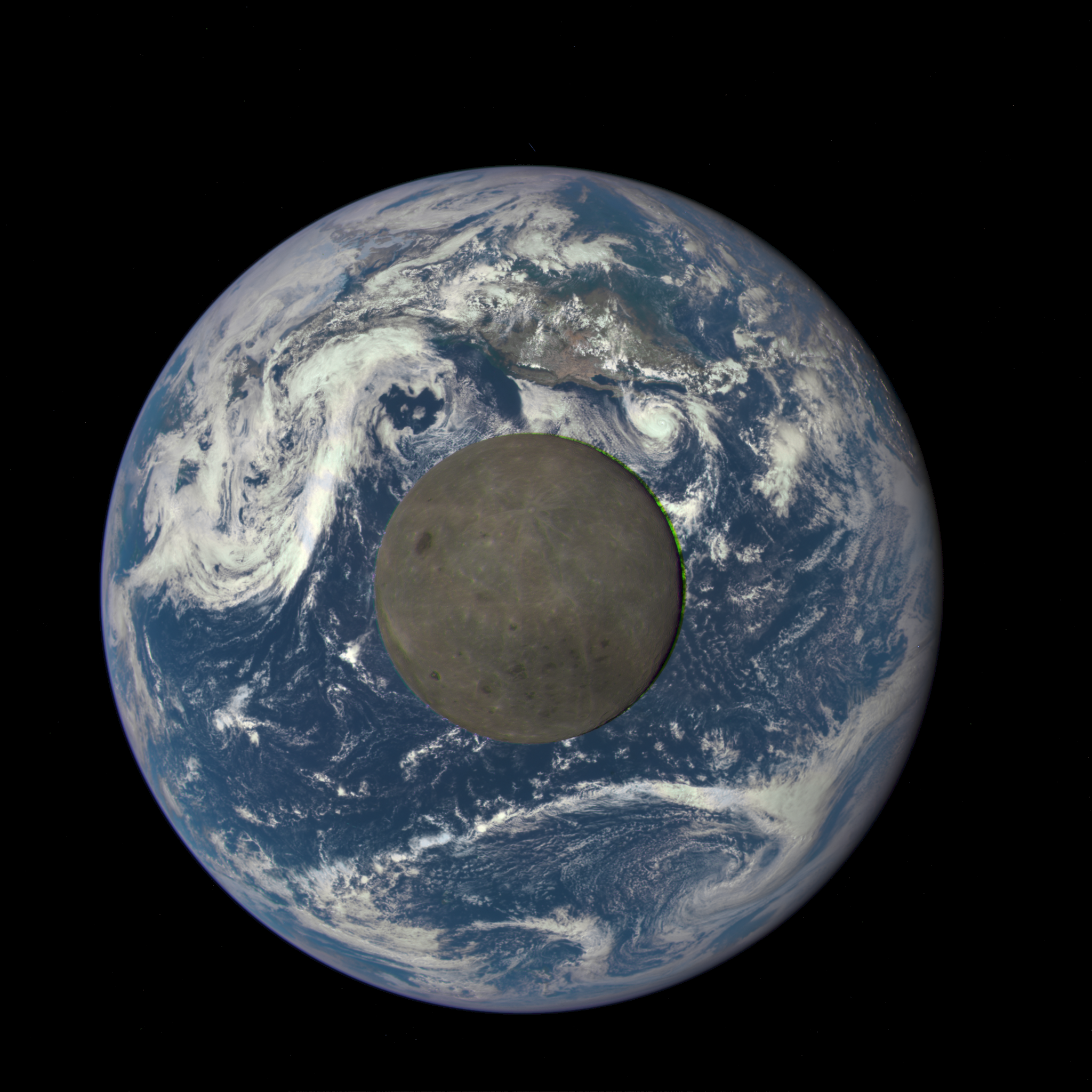 |
| The world's still turning, and so is the Moon, to which Artemis II has just begun its journey - DSCOVR. NASA |
We have a number of species that aren't going extinct just yet. Renewable energy is burgeoning. Medicinal research continues to amaze. Mainstream media is not the sole source of information. Fascism is not carrying all before it. City building isn't just for computers.
So, on that cheery note, go and find something of interest below.
Environment
If the situation with several critical endangered species is any guide, things may not be quite as bad as we are led to believe. Of course, many of these species are being carefully nurtured in localised habitats. Even so, the number of promising reports bodes well.
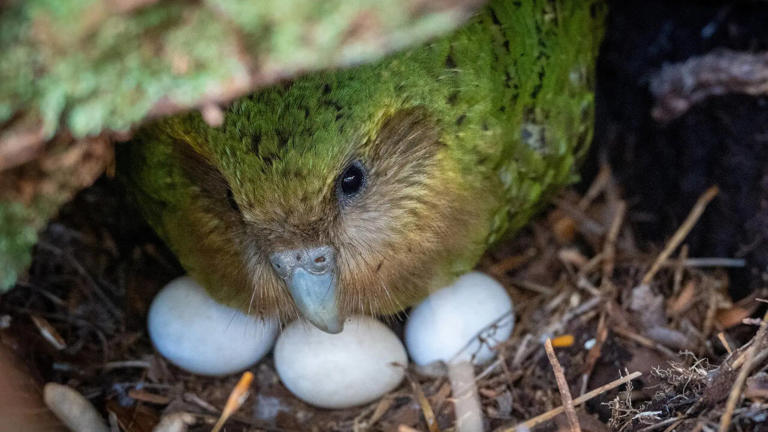 |
| Kakapos (and others) are on the rebound (- Wikipedia) |
First, though...
The Ugly
- "Rip, rip, wood chip...". The US Bureau of Land Management has just announced plans to eliminate the 60 year old protections of Oregon's old growth forests. Public consultation time for this proposal to 'facilitate maximal logging' has been minimal.
- Is our food system on the point of collapse? It's more fragile than we think, and triggering events like idiot wars do nothing to dispel this dread.
The Bad
- One year on, South Australia's algal bloom is persisting in some areas, and could flare up again.
- Even before a category 4-5 cyclone tore through a week or so ago, Northern Australia had been reeling from record flooding.
- What do we do about plastics? We might throw them in the recycling bin, but the sad fact is that only about 5% is actually recycled. It's a pernicious problem that will take a lot of head scratching to solve. Here are some thoughts on how to proceed (and see below). It involves some serious systems level thinking, including how to cut out the fossil fuel industry. There's more about this in the good news section. Meanwhile, keep using that recycling bin!
The Good
Biodiversity preservation efforts have been paying off recently, with a number of critically endangered species showing resilience:
- Once thought extinct, 158 floreana tortoises have been released back onto their native island in the Galapagos.
- A bumper crop of their favourite berries has caused populations of New Zealand's kakapo ground parrot to increase from 50 to 200.
- More colonies of the Lord Howe Island stick insect have been discovered on Ball's Pyramid, increasing the available gene pool. (the removal of rats from Lord Howe Island itself has already led to a boom in seabird nesting)
- The large tortoisehell butterfly has returned to the British Isles, after a sixty year absence.
- A survey of New Guinea wildlife reveals two new possum species considered extinct for millennia.
- After a century, and some decommissioned dams, Chinook salmon are returning to the Klamath catchment to spawn.
- Holland & Bartlett have become the first UK retailer to withdraw from the krill market. If you saw Attenborough's recent documentary on the oceans, you may remember the section on the factory ships sucking the polar oceans of its underlying food stock, with the dry observation that 'we may now be removing the foundation of an entire ecosystem'. Let's not do that.
- It lacks the publicity of its Amazonian neighbour, but the Cerrado, South America's peaty savanna lands, has significant carbon storing capacity.
- Converting plastics to vinegar may help recycle them.
- Although Australia has just overhauled its environmental protection laws, ensuring they are better laws will require close oversight. The devil will be in the details, as ACF's Brendan Sydes explains.
Climate
It has to be said that the way to tackle the most pressing problem of our age is not to ignore it, yet that does seem to be what much of mainstream media is trying to do. A lot of this is at the insistence of the sociopaths currently running the US.
The Ugly
- It's a problem that's far from going away, yet mainstream news coverage on climate change has been falling. The reasons are many-fold. Deliberate obfuscation under Trump is a major factor, but isn't the only one.
- An assessment of MethaneSat results finds that methane leakages are much higher than officially reported. The actual rates vary from 0.6% to over 20%(!) of production. (The latter values come from sites more concerned with oil extraction)
The Bad
- Your grandparents remember summers differently. Climate usually changes over centuries, not generations.
- Climate whiplash: it isn't just getting hotter, it's changing temperature far more quickly. And the rain...
- Extreme heat now affects one person in three.
- Having been quietly trending down from the alarming extremes of 2024, average ocean surface temperatures in the past month have abruptly surged back up to them.
- Warm ocean surface water expands, sea levels rise, and has started infiltrating fresh groundwater in coastal areas.
- ... as well as nuclear waste casings.
- It appears the extent of sea level rise has been underestimated, by an average 30cm.
The Good
- While it's bad news that renowned climate scientist Kate Marvel felt she had to resign from NASA in protest at the direction the Trump administration is forcing the agency to take, she has, at least, found another use for her expertise with Project Drawdown.
Energy
While things overall are going swimmingly for the renewable energy sector, a number of notable blots may give a different impression.
The Ugly
- Trump, or whoever motivates him, is growing desperate: bribing companies *not* to build wind farms. And that is exactly what Total Energy has just agreed to do! (update: as with anything involving Trump, the situation is convoluted. It appears Total wasn't planning to build a wind farm anyway! They still pocket the money, though.)
- It seems people in Alabama dislike data centres so much, they're willing to... ban the solar farms that power them!? (yes, it's a state over-reaction to a local dispute: more a case of mishandling than malice. Still...)
- Priorities. The community of Lake Tahoe has just been told by its main electricity supplier that it will be cutting them off to meet the demand from new data centres.
- Misleading information on climate and renewables is rife in Australia, and will take a substantial effort to fix the issue.
The Bad
- While the idea of 'balcony' solar panels is catching on in the states, utilities are trying to delay them.
- Australia's solar capacity may be increasing in leaps and bounds, but the wind sector seems to be stalled. None of the fifteen proposed projects are ready for construction.
- The rate of transition to renewable energy is now so rapid that it has the potential to cause problems as older forms of power are phased out, sometimes not as smoothly as we'd like. This Volts podcast discusses the problem with Emily Grubert from the University of Notre Dame.
The Good
- Despite Trump's ongoing and increasingly farcical attempts to block offshore wind farms, they are powering ahead.
- About this time last year, around 37% of Australia' energy needs were being met by renewables. Today, that figure is over 50%, and availability is such that free daytime power is being proposed.
- Meantime, the forecast gas shortfall continues to be pushed back as more batteries become available
- If this rate of take up seems extraordinary, have a look at the historic (now almost complete) trend in Denmark.
Health
 |
| If you've read this far, you deserve a lift! - Bat World Sanctuary |
The Ugly
'Health' Secretary RFK Jr replaced the entire CDC vaccine advisory board with prominent vaccine skeptics. Pending objections, the activities of the Board has been blocked by a court ruling. Rather than replace one set of deniers with another, the Board may be abolished entirely.
The Bad
- Rising levels of atmospheric CO2 are being reflected in blood levels.
- Who knew? Concentration camps encourage contagious disease, like measles.
The Good
- It may help ward against malaria, but sickle cell anemia is a chronic, debilitating genetic condition that affects 100,000 Americans alone. There is now a promising treatment for it.
- Likewise a simplified treatment for sleeping sickness.
- ... and a vaccine for E.Coli related diarroeah (a major cause of infant mortality in the developiing world)
- It is a scary prospect that, under RFK's watch, the US may have to start contending with dengue fever as temperatures rise. Fortunately, when faced with the same problem, Brazilian and Peruvian doctors (with a little help from Queensland) came up with an ingenious solution.
- Ensuring quality of life isn't just for old humans. Old fruit bats can benefit as well which, in turn (and never mind the lyssavirus), can further benefit humans. Enjoy!
Resistance
 |
| Lock her up! - Etienne Laurent / AFP via Getty Images |
The No Kings rallies last weekend drew over 8 million people nationwide. This photo of a person at the event in LA event, dressed as Liberty, and being arrested provides a good summary of the US at the moment. While ICE would doubtless consider 'taking the huddled masses yearning to be free' as part of their job description, the lady is smiling, and the arresting (police) officer on the right seems to appreciate the optics of the scene.
The point is that the people are winning. Trump hasn't made up an AI image of him bombing the crowds this time, but he's considering an EO banning postal voting (Presidents excepted) at the mid-terms in November, and ICE being called in to 'help' TSA at airports is considered a dress rehearsal for them to police voting queues.
These panic reactions alone tell you that the people are winning, although they still have to actually win.
The Ugly
- That Trump is attempting to establish a dictatorship is pretty obvious by now. Even the mainstream media are taking notice. (Most alarming is the speed with which it is occurring.)
- What is a Man? What is an American? A question for the US Supreme Court as it prepares to hear the case for abolishing US Citizenship as a birthright.
- Having started an idiotic (unless you capitalise on disaster) war against Iran, the reporting hasn't been showing the US dominating the field. So, the FCC is threatening to cancel spectrum (ie broadcast) permits of any broadcaster posting 'hoaxes' and 'misleading coverage'.
- Trump's budget slashed science funding. Congress restored it. With a typical show of maturity, Trump is now blocking approved funds.
- "... for my enemies, the Law". One of the more onerous tactics being employed to suppress dissent is the SLAPP suit. Greenpeace has been slugged for $345 million with one.
- Why support independent journalism? Information is a critical resource and, through media control, the 'broligarchy' are seeking to establish a monopoly on it.
The Good
- 'No Kings' rallies continue to grow. The turnout on Mar 28 is estimated to have been over 8 million, which is 2% of the US population. There were no violent incidents reported (on the part of the protestors, that is. Some police departments like the LAPD decided to generate some)
- Meanwhile, in London, a protest against the rise of the far right drew 50 or 500 thousand (depending on who you asked)
- The US National Academy of Science is resisting calls for it to remove information relating to climate change, pointing out that many groups, such as the judiciary, rely on this data to inform their opinions.
Housing
The Bad
Due to the gas shortages from the Iran conflict, Pakistan is experiencing a run on induction cookers.
The Good
- Between 2019 and 2023, Copenhagen has reduced its building related emissions by 60%.
- A new city is being planned in California. Will it be an inspiration or a fiasco? David Roberts thinks the idea is fascinating enough to have devoted two Volts podcasts to it.
Transport
The Bad
- This will probably happen in any system when speed is prioritised over safety, but (adding to their other woes) migrants in the US have been identified as being particularly susceptible to this problem in the renewable and EV sector.
- Too much of a good thing? A new Sydney bike and walking trail is causing congestion headaches to residents of one of the streets it runs along.
The Good
- Paris has made major strides in reducing transport reliance on the car.
- BYD's Blade battery technology allows vehicle recharging in ten minutes.
- The list of electrified vehicles now includes combine harvesters.
- Car-free zones and the disabled? It's not the problem it sounds, but 'walkable' areas do need to make some adjustments.
Plaigue
This anatomical diagram of a human shoulder is being used by a Minnesota clinic. It summarises everything wrong with the AI craze.
 |
| AI generated image of shoulder musculature. Spot the mistakes. |
To wit: we are burning the planet, to generate wildly inaccurate portraits of reality, that are being taken up by people who should know better, but who can't be bothered checking.
Yes, there are some good uses of AI, but the vast majority of it is causing active harm. Anyway, here are the details:
The Ugly
- AI is being employed to identify targets in the Iranian bombardment. One such target was a primary school, resulting in the deaths of over 150 enemy students. Computers don't make the mistakes. The humans feeding them information do, but it provides a convenient shield and scapegoat.
- "For my friends, everything...". Under Bezos, the Washington Post has started using user data to set individual subscription prices. Waiting for Amazon to follow suit? (Thinking about it, this is reminiscent of China's social credit scoring system. Also, from the article comparing the 19C railway bubble below, it seems the railroad barons of the time were doing something similar.)
- One thing AI does seem to be good at is the generation and spreading of misinformation, and guess who finds that useful?
- The disinformation can take on subtle forms. Even seemingly innocuous uses like autocompletion of sentences can train a user's mind in ways they don't necessarily intend. (No, being forewarned doesn't seem to matter.)
- While on this matter, editting and critiquing is an important part of the writing process. Good editors can command an appropriate fee for their services. So, Grammarly thought it would be a good idea to add a new AI feature to their product that reviewed an author's work in a style reminiscent of prominent writers and editors... without first seeking the permission of those writers and editors. Grammarly is now facing a massive class action (Oh, and to add defamation to fraud, it seems the AI feature doesn't work very well.)
The Bad
- Data centres have been found to increase neighbourhood temperatures by up to 9C, with the effect apparent from several kilometers away. Imagine that on a hot Summer day. In a world that's already warming rapidly, these gas consuming juggernauts seem intent on saying the quiet part out loud.
- What price progress? It is estimated that the local emissions from one data centre alone could result in $50-100 million in health related damages.
- The craze is now hitting Australia. If we are to avoid the unchecked exploitation seen in the US, what is to be done about it? While the Australian Government has published 'expectations' for how to proceed, some firmer controls on the use of power and water is needed.
- Banks are starting to get nervous about financing data centres, leading to companies like Oracle to lay off 30,000 staff.
- Perhaps, if it follows the railroad bubble of over a century ago, the concerns arising from AI will evaporate, except for all those gas generators on the ledgers looking for a use.
The Good
- Apart from its dubious utility, one of the biggest criticisms levelled at the rampant AI usage happening today is the equally rampant growth in data centre planning, and the correspondingly rampant energy needs. Can the demand be met without reverting to mass produced gas generators? There may be a way. Once again, Volts has an interesting discussion on the topic.
- In the by now almost completely polarised politics of the US, legislating for the control of data centres has become one of the few issues that has bipartisan support.


